


Yes, credit unions offer mortgage loans, and Beginnings Credit Union provides several options for members who are ready to buy a home. Options include fixed-rate, adjustable-rate, government-backed, jumbo, construction, and no-closing-cost mortgages. First-time homebuyers can also explore the Dream Home Club, which helps eligible buyers save toward a down payment. If you're thinking about buying, connecting with a mortgage professional early can help you understand your options.
Buying a home is a major financial decision. Before you start touring homes or making offers, you'll need to think about how you'll pay for the purchase.
One question many homebuyers have is, do credit unions offer mortgage loans? The answer is yes. Credit unions can provide many of the same types of home financing available through banks and other mortgage lenders.
For Beginnings Credit Union members, that includes several mortgage options designed for different homebuying situations. Whether you're purchasing your first home, building a house, buying land, or refinancing an existing mortgage, you may have several options to consider.
Beginnings combines digital tools with personal support throughout the process. Our mortgage team can help you understand the choices available and take the next step toward homeownership.
That guidance can be especially helpful for first-time buyers. The National Association of REALTORS® reported that first-time buyers represented just 21% of buyers in its 2025 survey, the lowest share in the history of its data. NAR's 2025 Profile of Home Buyers and Sellers also found that the typical first-time buyer was 40 years old.
If you're hoping to purchase your first home, understanding your mortgage choices and preparing early can help you feel more confident when you're ready to buy.
How Do Credit Union Mortgages Work?
Credit union mortgages work much like mortgages from banks and other lenders. You apply for financing, provide information about your finances, choose a loan program, and work through the approval and closing process with your lender.
At Beginnings, you can explore a variety of mortgage loan options, including fixed-rate mortgages, adjustable-rate mortgages, government home loan programs, jumbo mortgages, construction loans, land loans, and refinancing.
One benefit of working with a credit union is the opportunity to have a more personal relationship with your financial institution. At Beginnings, mortgage loans are decided on and serviced locally, and members can work directly with mortgage professionals throughout the process.
A mortgage is a long-term financial commitment. Taking time to understand the full cost can help you make a decision that fits your budget.
How Is a Credit Union Different from a Bank?
Credit unions and banks offer many of the same financial services, but they have different ownership structures.
A bank is generally owned by shareholders. A credit union is owned by its members. That difference affects how each type of institution operates and how profits are handled. The NCUA describes credit unions as not-for-profit, member-owned cooperatives.
Here are some of the main differences:
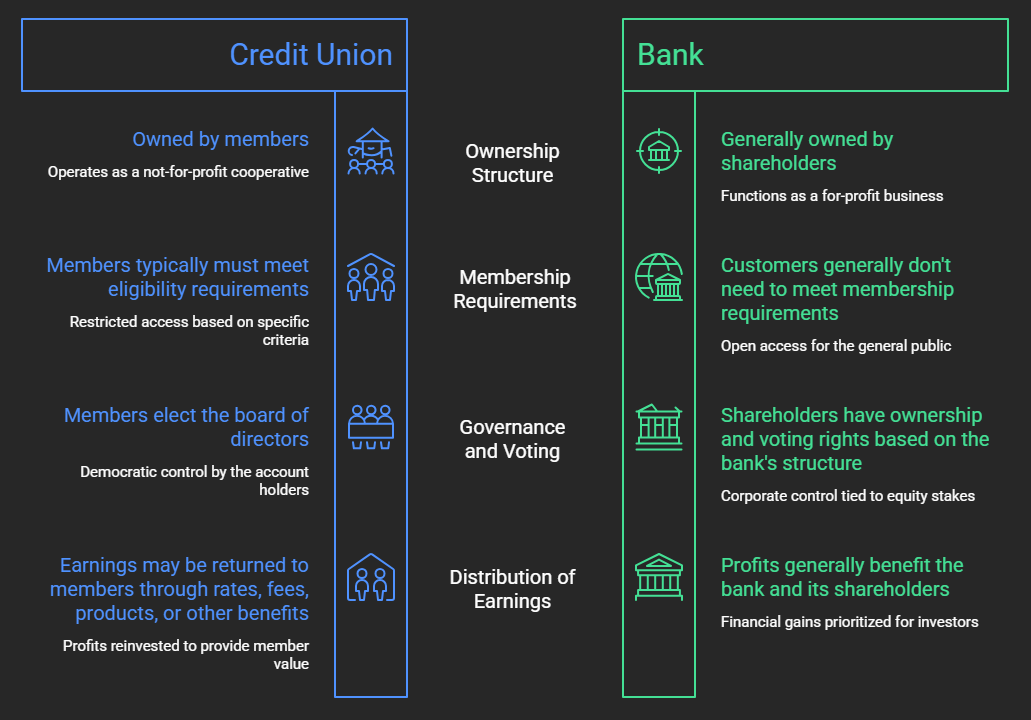
This doesn't mean every credit union mortgage or bank mortgage will have the same terms. Rates, fees, loan requirements, and available programs vary by financial institution and borrower.
Beginnings explains that its member-owned structure allows it to use earnings in ways that can benefit members, including lower loan rates, higher savings rates, lower fees, and products such as no-closing-cost mortgages.
For homebuyers, the important thing is to compare the actual loan terms, costs, features, and service offered by each lender.
Do You Have to Be a Member to Get a Beginnings Mortgage?
Yes. Because Beginnings is a credit union, you need to be eligible for membership before using its mortgage products.
Credit union membership requirements vary from one institution to another because each credit union has a defined field of membership. The NCUA notes that eligibility can be based on factors such as where someone lives or works, an employer or organization affiliation, or another qualifying connection.
Beginnings serves people throughout 33 counties. You may be eligible to join if you live, work, worship, attend school, or own a business in its service area, or if you're connected to one of Beginnings' Select Employer Groups.
Family members may also be eligible. Beginnings states that spouses, lineal ancestors, and descendants, including those related through adoption, can join when the eligibility requirements are met.
Once you're eligible, getting started is straightforward. Beginnings requires members to maintain a $5 membership share account. That share establishes your membership and gives you access to the credit union's products and services.
Learn more about who can join Beginnings Credit Union and how membership works.
One benefit of joining is that membership can continue even if your circumstances change. Beginnings says members can remain members for life as long as their membership share remains open.
That means becoming a member isn't simply a step you take to get a mortgage. It can give you an ongoing relationship with the credit union for checking, savings, credit cards, auto loans, home loans, and other financial needs.
What Mortgage Loans Does Beginnings Credit Union Offer?
Beginnings Credit Union offers several mortgage options, including fixed-rate and adjustable-rate mortgages, no-closing-cost mortgages, government-backed loans, jumbo mortgages, construction and land loans, and specialized mortgage programs.
Having different options matters because no two homebuyers have exactly the same needs.
Fixed-Rate Mortgages
A fixed-rate mortgage has an interest rate that remains the same throughout the loan term. This can make budgeting easier because the principal and interest portion of your monthly payment stays consistent.
Beginnings offers fixed-rate mortgages for homebuyers who want the predictability of a fixed interest rate.
Adjustable-Rate Mortgages
An adjustable-rate mortgage, or ARM, has an interest rate that remains fixed for an initial period before it can adjust based on the terms of the loan.
Beginnings offers adjustable-rate mortgage options, including 7/1 and 15/1 ARM products.
Government Home Loan Programs
Government-backed mortgage programs can give qualified borrowers additional options.
Beginnings offers FHA, VA, and USDA home loan programs. These programs have different eligibility requirements and features.
For example, Beginnings' FHA mortgage option allows qualified borrowers to purchase a home with a down payment as low as 3.5%. Eligible veterans, service members, and surviving spouses may qualify for VA financing with no down payment. USDA financing may also offer low or no down payment options for qualified buyers purchasing eligible properties.
Because requirements vary by program, it's important to discuss your situation with a mortgage professional before deciding which option is right for you.
No-Closing-Cost Mortgages
Closing costs can add a significant amount to the cash needed when buying a home. Beginnings offers no-closing-cost mortgage options for qualified borrowers.
The program has specific requirements, so prospective borrowers should review the details and talk with the mortgage team to determine whether it fits their needs.
Beginnings also offers jumbo mortgages, land loans, construction loans, and specialized programs for medical professionals and community heroes. You can explore the full range of mortgage options to see which programs may apply to your situation.
What Should First-Time Homebuyers Know About Getting a Mortgage?
First-time homebuyers don't need to have everything figured out before starting the mortgage process. A good first step is understanding your budget, credit, income, debts, savings, and available down payment.
The Consumer Financial Protection Bureau recommends determining what you can afford before shopping for a home and understanding the costs that come with buying and owning a property. The CFPB's homebuying resources can help buyers prepare.
It's also important to remember that the down payment isn't the only upfront expense. Buyers may also have closing costs, prepaid expenses, moving costs, inspections, and other expenses.
The CFPB provides a guide to determining your down payment and explains that buyers should consider their overall financial situation rather than focusing only on reaching a specific down payment amount.
For first-time buyers, talking with a mortgage professional early can also help you understand your options before you begin making offers.
Building Your Down Payment With the Dream Home Club
Saving for a down payment can be one of the biggest challenges for first-time homebuyers. Beginnings offers the Dream Home Club for qualified first-time homebuyers who want additional help building their savings.
Eligible participants can receive $3 in matching funds for every $1 saved, up to $3,500 in assistance toward a home purchase. The program has eligibility and savings requirements, so prospective participants should review the current program details before enrolling.
The Dream Home Club is designed to help qualified first-time buyers develop a consistent savings habit while working toward homeownership.
Participants must meet the program's requirements, which include income guidelines and other eligibility criteria. The program also requires qualifying savings activity over a set period before purchasing a home.
If you're a first-time buyer and saving for a down payment feels like the biggest obstacle between you and homeownership, the Beginnings Dream Home Club may be worth exploring.
What Should You Know Before Applying for a Mortgage?
Before applying for a mortgage, review your income, savings, debts, credit, down payment, and expected homebuying costs. Getting pre-approved can also give you a better idea of what you may be able to afford before you start shopping.
A mortgage pre-approval isn't a guarantee that you'll receive a loan. The Consumer Financial Protection Bureau explains that pre-approval generally means a lender has tentatively determined how much it may be willing to lend based on information available at that point.
Before applying, consider gathering:
- Recent income information
- Employment history
- Current debt information
- Bank and investment account information
- Available savings
- Expected down payment
- Information about other financial obligations
It's also helpful to create a realistic homebuying budget.
A lender may tell you that you qualify for a certain loan amount, but you don't have to spend the maximum. Your monthly housing payment should leave room in your budget for other needs, savings, and unexpected expenses.
Mortgage rates can also change over time. Freddie Mac's Primary Mortgage Market Survey tracks weekly mortgage rate trends, which can give buyers a general idea of where rates have been moving.
Your personal rate may be different because mortgage pricing depends on factors such as the loan program, borrower qualifications, loan amount, property, and other factors.
What Makes Beginnings Different for Homebuyers?
A mortgage is a major financial decision, and the lender you choose can affect more than your interest rate.
Beginnings combines mortgage products with personal support. As a credit union, its focus is on serving members rather than outside shareholders.
The credit union also has a long history of helping members with financial goals. Beginnings has served its community since 1953 and provides financial products for individuals, families, and businesses.
For homebuyers, that can mean having access to digital tools while still being able to connect with people when questions come up.
Beginnings also focuses on financial education through programs such as Banzai and Your Money Matters. That educational approach can be useful for buyers who want to understand the financial side of homeownership, not simply complete a mortgage application.
How Can You Get Started With a Beginnings Mortgage?
Start by determining whether you're eligible for Beginnings membership. If you're eligible, you can establish your membership by maintaining the required $5 membership share account. If you are unsure about membership eligibility contact Beginnings Credit Union.
From there, you can explore mortgage programs, review your budget, gather your financial documents, and talk with the mortgage team about your goals.
You don't have to know which mortgage is right for you before you start the conversation. A mortgage professional can help you understand the available options and what may fit your situation.
If you're ready to take the next step, contact Beginnings Credit Union to learn more about membership and mortgage options.
Conclusion
Credit unions provide many of the same mortgage products available through banks, but their structure is different. Credit unions are member-owned, not-for-profit cooperatives, and borrowers generally need to become members before using their financial products.
At Beginnings, eligible people can join by establishing a $5 membership share account. Members can then explore mortgage options including fixed-rate mortgages, adjustable-rate mortgages, government home loan programs, and no-closing-cost mortgages.
First-time homebuyers may also want to look into the Dream Home Club, which is designed to help qualified participants build savings toward a home purchase.
Whether you're just starting to think about buying a home or you're ready to apply, understanding membership, mortgage options, and the differences between banks and credit unions can help you take the next step with more confidence.
Frequently Asked Questions
Do credit unions offer mortgage loans?
Yes. Credit unions offer mortgage loans along with other financial products such as checking accounts, savings accounts, auto loans, and credit cards. Beginnings offers several mortgage options, including fixed-rate, adjustable-rate, government home loan programs, and no-closing-cost mortgages.
Do you have to be a member to get a mortgage from a credit union?
Generally, yes. Credit unions serve members who meet their eligibility requirements. At Beginnings, eligible members can establish membership by maintaining a $5 membership share account.
Who can become a member of Beginnings Credit Union?
Beginnings serves people who live, work, worship, attend school, or own a business in its 33-county service area. People connected to certain Select Employer Groups may also qualify. Eligible family members may qualify as well.
How is a credit union different from a bank?
Credit unions are member-owned, not-for-profit cooperatives, while banks are generally owned by shareholders and operate as for-profit businesses. Credit unions also have membership eligibility requirements that banks generally don't have.
Are credit union mortgages available to first-time homebuyers?
Yes. First-time homebuyers can apply for eligible mortgage programs through credit unions. Beginnings also offers the Dream Home Club for qualified first-time homebuyers who meet the program's requirements.
What mortgage options does Beginnings Credit Union offer?
Beginnings offers fixed-rate mortgages, adjustable-rate mortgages, government home loan programs, and no-closing-cost mortgages. Available programs and qualification requirements vary by borrower and loan type.
How much do I need for a mortgage down payment?
The amount you need depends on the loan program, property, lender requirements, and your financial situation. Some mortgage programs allow qualified buyers to purchase with a lower down payment. Buyers should also budget for closing costs and other expenses associated with buying a home.
How do I get started with a mortgage at Beginnings Credit Union?
Start by determining whether you're eligible for membership. If you qualify, establish your membership with the required $5 membership share account. You can then explore mortgage options and connect with the Beginnings mortgage team to discuss your homebuying goals.